


When it comes to restoring clarity, tone, and luminosity, few treatments are as versatile or widely requested as IPL. Short for Intense Pulsed Light, IPL has become a cornerstone in modern aesthetic medicine for clients who want visible results without surgery or extended downtime. And while it can be performed throughout the year, winter remains the most strategic season to begin.
Understanding IPL
IPL is a non invasive light based treatment designed to improve overall skin tone and clarity. Unlike traditional lasers that rely on a single wavelength, IPL delivers multiple wavelengths of light into the skin. This broad spectrum approach allows practitioners to address several concerns within the same treatment plan.
The light energy targets pigment and vascular irregularities beneath the surface. These areas absorb the light, and the body gradually clears away the damaged or excess cells. Over time, the skin appears brighter, more even, and refined in texture.
Rather than masking imperfections, IPL works to correct them at the source.
What IPL Can Improve
One of IPL’s greatest advantages is its ability to treat multiple concerns simultaneously. It is commonly recommended for:
- Sun damage and hyperpigmentation
- Age spots and freckles
- Uneven skin tone
- Redness and visible capillaries
- Mild rosacea related redness
- Dull or fatigued looking skin
Many clients describe their results as clearer, smoother, and noticeably more luminous. The improvement is progressive and natural looking, enhancing overall skin quality rather than dramatically altering appearance.
What to Expect During Treatment
An IPL session is efficient and generally well tolerated.
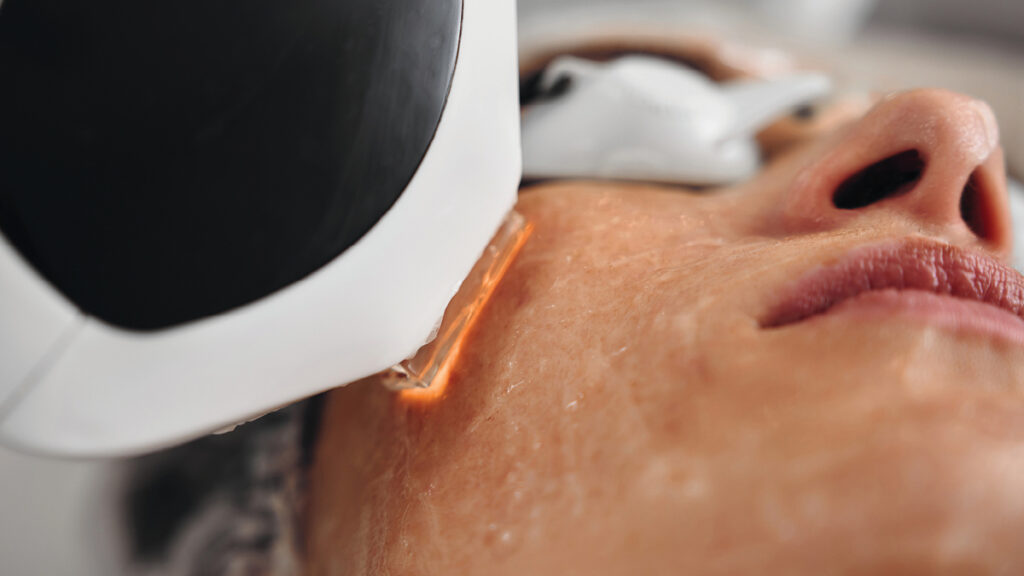
A cooling ultrasound gel is applied to the treatment area, and a handheld device delivers controlled pulses of light across the skin. Most clients report a brief warming sensation or a light snapping feeling.
Following treatment, mild redness may occur and typically resolves within hours. Pigmented areas often darken temporarily before fading or flaking away over the next one to two weeks. This process indicates the treatment is effectively targeting discoloration.
Because IPL works gradually, a series of treatments spaced several weeks apart is usually recommended. Maintenance sessions may be advised depending on long term skin goals.
Why Winter Is Ideal for IPL
Although IPL can be performed year round with strict sun protection, winter provides optimal conditions.
IPL increases the skin’s sensitivity to UV exposure. During colder months, reduced sunlight and shorter days make post treatment protection more manageable. Clients naturally spend more time indoors and wear protective clothing, lowering the risk of unwanted pigmentation changes.
Winter is also the ideal time to address the visible effects of summer sun exposure. Freckles, pigmentation, and redness that intensified during warmer months can be corrected well before spring and summer events.
Starting in winter allows sufficient time to complete a full treatment series and see gradual improvements before peak social seasons or vacations.
Is IPL Right for Everyone?
IPL is highly customizable, but it is not suitable for every skin type or condition. A thorough consultation is essential to evaluate skin tone, medical history, and treatment goals. A qualified provider can determine whether IPL is appropriate or recommend alternative options.
For those looking to improve tone, reduce discoloration, and strengthen overall skin quality, IPL offers a measured and effective approach. Beginning treatment in winter maximizes safety, optimizes results, and allows time for visible transformation.
As spring approaches, the goal is not a temporary glow. It is healthy, resilient skin that reflects consistent care and thoughtful timing.